

Construction Staking Survey for Manufactured Home Pad Layout
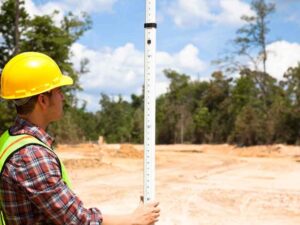
A construction staking survey prevents that scenario by marking exactly where the pad goes before any gravel or concrete is placed. A surveyor sets stakes for the pad corners, elevations, and key reference points based on your site plan. If you’re a property owner, dealer, or installer, the takeaway is clear. Get the pad staked by a surveyor before site work starts, and have it checked again before the home arrives.
The delivery truck shows up, the home sections are ready, and the installer pulls out a tape to check the pad. That’s a bad moment to learn the pad sits two feet into a setback or slopes the wrong way. Once a manufactured home is set, moving it is slow, costly, and sometimes not possible at all.
Why Construction Staking Matters for Manufactured Home Pad Placement
Staking turns a drawing into marks on the ground that crews can build from. Without it, the pad’s location depends on someone measuring from a fence or a guess about where the property line runs. Fences and old markers are often wrong, and small errors grow quickly over a 60 or 70 foot home.
A construction staking survey ties the pad to measured property corners and set elevations. That means the home lands where the permit says it will. It also gives the grading crew, utility contractor, and installer one shared set of marks to work from.
Checking Property Boundaries, Setbacks, and Site Access Before Staking
Good staking starts with knowing where the property lines are. If no recent boundary survey exists, the surveyor may need to locate or reset corners first. Every setback measurement depends on those corners being right.
Setbacks are the minimum distances a structure must sit from property lines, roads, or other features. They vary by county, zoning district, and property type, so check the rules with your local planning office before finalizing the layout. Also look for recorded easements for utilities, drainage, or access, since you generally can’t place a home on top of one.
Manufactured homes arrive on wide, long trailers that need room to turn and back in. Walk the route from the road to the pad and look for tight corners, soft ground, overhead lines, and trees. If the truck can’t reach the pad, the layout may need to shift, and it’s much easier to change stakes than a finished pad.
Establishing Pad Corners, Elevations, and Finished Floor Reference Points
Once the layout is confirmed, the surveyor sets stakes at each pad corner. Many surveyors also set offset stakes a few feet outside the pad. These survive grading equipment and let crews rebuild the corners if the main stakes get knocked out.
Elevation matters as much as location. The surveyor marks grade stakes showing how high the finished pad should be. That height is usually tied to a benchmark, which is a fixed point with a known elevation that everyone measures from.
The finished floor elevation is the planned height of the home’s floor. It controls drainage away from the home, step heights at the doors, and sometimes floodplain compliance. Ask your installer and site plan designer to agree on this number before staking, because changing it later affects nearly everything else.
Coordinating Staking Measurements With Grading and Utility Installation
The grading crew builds the pad to the stakes, so they need to know what each mark means. Most stakes carry notes for cut or fill, which tell the operator how much soil to remove or add. Go over these markings with the crew before work starts so nobody misreads them.
Utilities need the same care. Water, sewer or septic, and electrical lines must reach connection points under the home at the right spots. The surveyor can stake those stub-out locations based on the home’s floor plan, which saves cutting and patching later.
Ask the dealer for the manufacturer’s setup drawings early. These show pier locations, utility connection points, and the exact footprint. Staking from the actual home plans, instead of a generic size, keeps everything lined up.
Verifying Pad Alignment Before Manufactured Home Delivery and Installation
A finished pad should be checked before the home is delivered. The surveyor confirms the pad corners, dimensions, and elevation still match the plan. This step catches problems while they’re cheap to fix, like a pad poured a few inches long or a corner that’s out of square.
Many owners skip this check to save time, and that’s a mistake. A short follow-up construction staking survey costs far less than a delayed delivery or a home set in the wrong place. Some lenders, inspectors, or installers may also want written confirmation, though this varies by project.
Frequently Asked Questions
Do I need a surveyor to stake a manufactured home pad?
Many counties don’t name who must stake a pad, but setbacks are measured from property lines that only a licensed surveyor can establish. A small error near a boundary can lead to a failed inspection or a dispute with a neighbor. Hiring a surveyor gives you measured, documented locations. Check with your local permit office to see what they expect for your project.
How long does pad staking take?
Staking for a single home site often takes a day or less once the layout is approved. Extra time may be needed if property corners must be found or reset first. Scheduling depends on the surveyor’s workload and the weather. Book early so staking doesn’t hold up your grading crew.
What information should I give the surveyor?
Provide the site plan, the home’s setup drawings, and the planned finished floor elevation. Include any permit conditions, easement documents, and a recent boundary survey if you have one. The surveyor also needs to know where utilities will connect. Complete information means fewer return trips and fewer changes.